Compact
Ideal for a laptop or one modest monitor. Use a monitor arm to recover depth.
The complete desk guide
The right dimensions, frame, surface, and layout—explained without brand hype or showroom jargon.
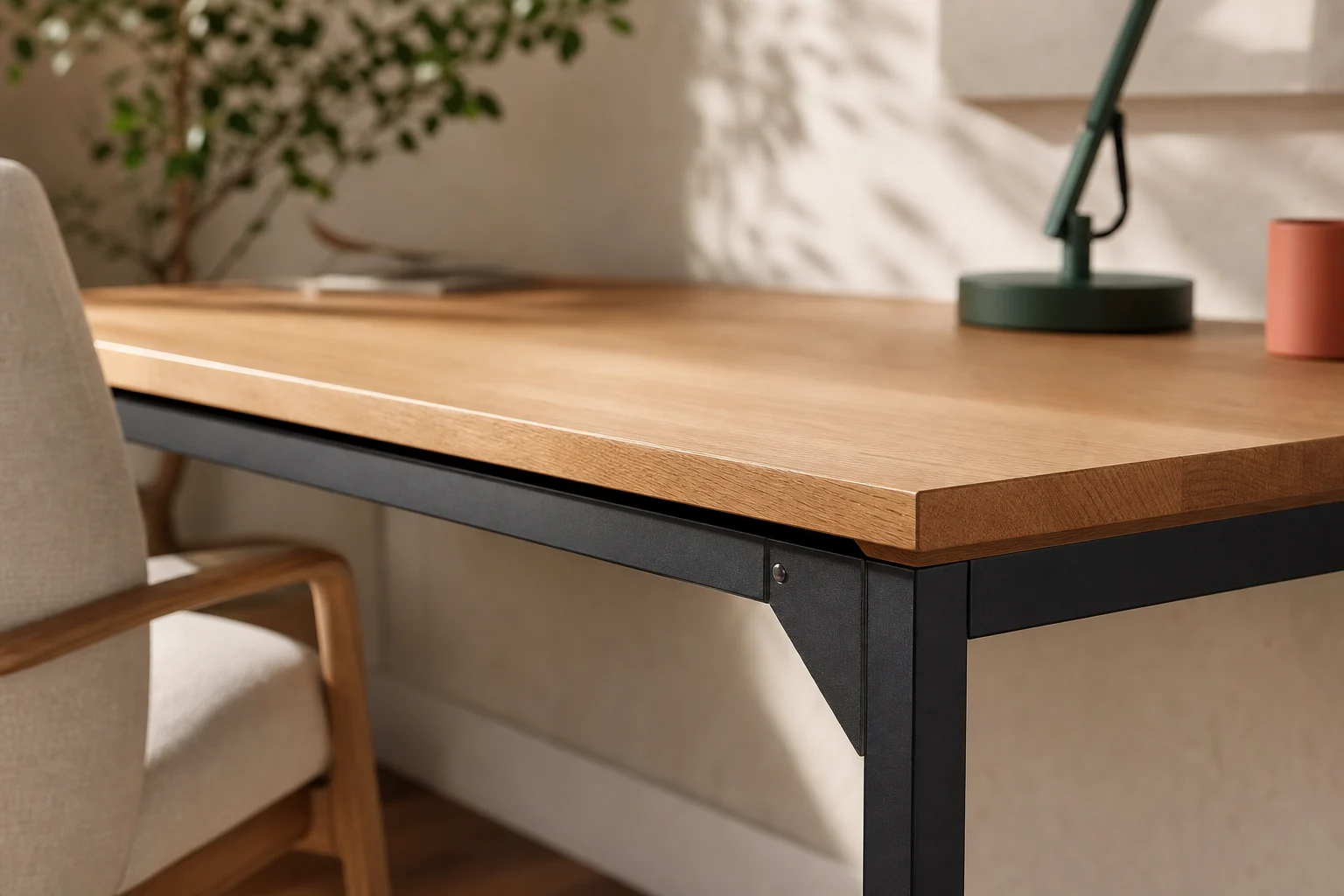
Desk width is about workflow, not status. Give every everyday object a home, then add enough clear surface to think.
Ideal for a laptop or one modest monitor. Use a monitor arm to recover depth.
The flexible sweet spot for most home offices and single-monitor setups.
Room for dual displays, creative tools, and distinct work zones.
When your shoulders are relaxed, your forearms should land roughly parallel to the floor. That—not an arbitrary “standard”—is your working height.
Start around 72–74 cm if you are of average height, then adjust the chair so your feet are supported and elbows are close to 90 degrees. A footrest solves more problems than lifting the desk too high.
Set the surface just below elbow height. Save one seated and one standing position, then change before discomfort arrives. Movement matters more than standing all day.
Warm, repairable, and visually calm. A matte finish hides reflections and fingerprints better than high gloss.
Durable, consistent, and often the best value. Look for a solid core and a well-finished front edge.
Soft to the touch and low-glare, with richer color choices. It can mark, but develops character gracefully.
For fixed desks, inspect the joints. For sit–stand frames, prioritize lateral stability, a useful adjustment range, quiet motors, and collision detection over app controls.
Your desk, worked out